Halloween at Home With Pets: How to Keep the Night Fun, Safe and Stress Free
Halloween can quickly become overwhelming for pets when doorbells, costumes, candy and unfamiliar visitors take over the house. These Halloween pet safety tips will help you create a calmer, safer night without taking the fun out of the celebration. A little preparation can make a big difference, and there are several simple ways to help your pet feel secure at home.
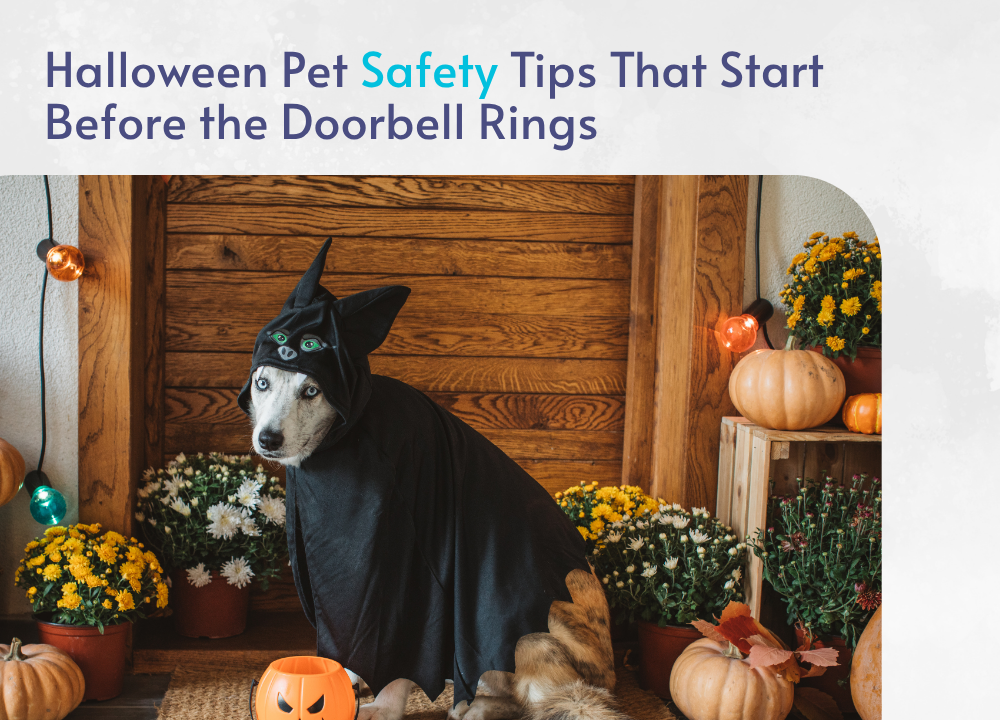
Halloween Pet Safety Tips That Start Before the Doorbell Rings
For many pets, the biggest challenge is the sudden change in routine. More people are outside, the front door keeps opening and familiar family members may suddenly look very different in costume.
Before trick or treating starts, create a quiet space away from the front entrance. Include familiar bedding, water and a favourite toy.
A walk or play session earlier in the day can also help release extra energy before the neighbourhood gets busy.
It is worth checking that collars, identification tags and microchip information are current. Even pets that rarely try to escape can react differently when frightened.
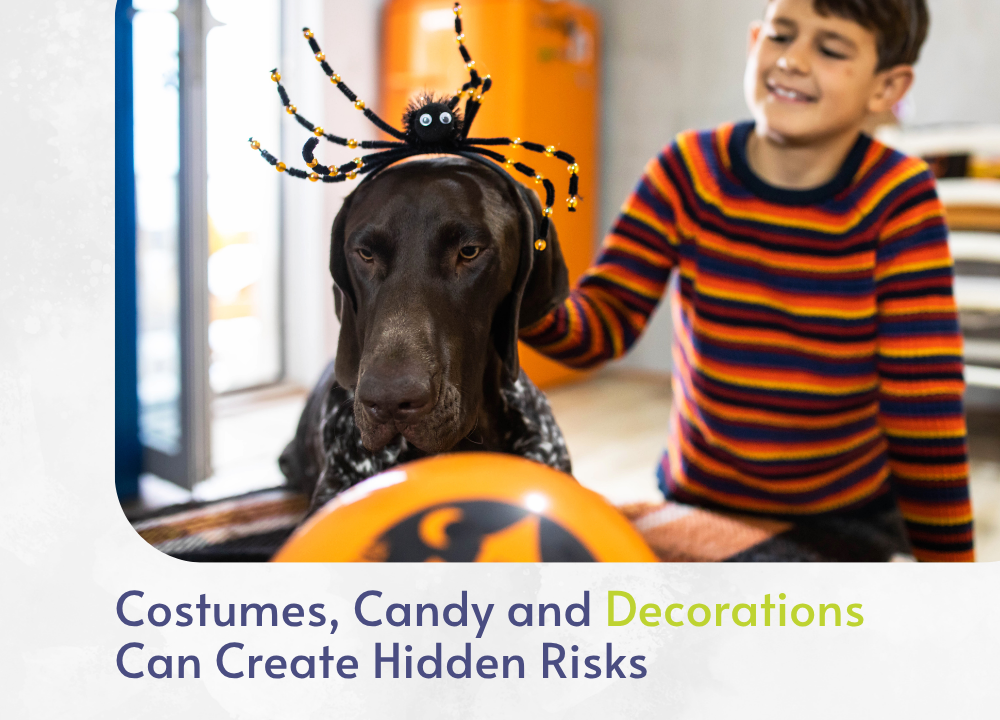
Costumes, Candy and Decorations Can Create Hidden Risks
Chocolate is one of the best known Halloween dangers for pets, but it is not the only one. Candy containing xylitol can also be harmful, while wrappers and small plastic pieces can create choking or digestive risks.
Keep candy bowls well out of reach and remind children not to share their treats with pets.
Be selective with costumes
Some pets are perfectly comfortable dressing up. Others clearly are not.
If your pet wears a costume, make sure it does not restrict breathing, hearing, vision or movement. Avoid loose pieces that can be chewed or swallowed.
Secure electrical cords, keep candles out of reach and place small decorations where curious paws cannot get to them.
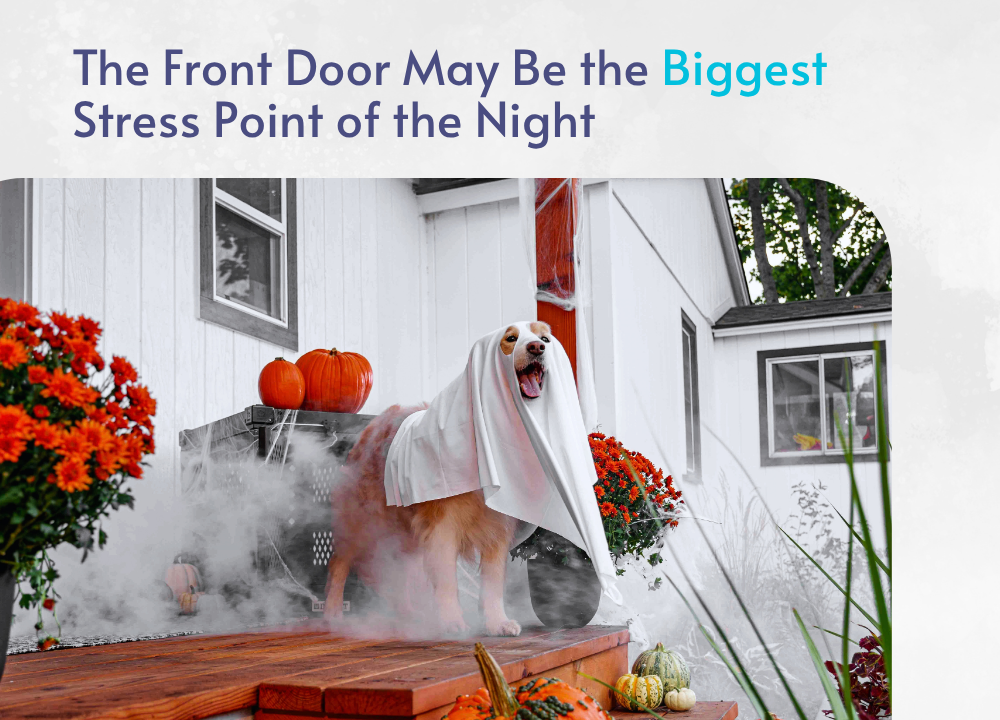
The Front Door May Be the Biggest Stress Point of the Night
For many homes, the front entrance becomes Halloween headquarters. For pets, it can be the most stressful part of the evening.
Repeated knocking, ringing doorbells and unfamiliar visitors can trigger barking, pacing, hiding or attempts to escape.
A baby gate, closed interior door or separate room can help create a safe barrier.
If your pet reacts to people passing outside, closing blinds or curtains can reduce stimulation. These simple Halloween pet safety tips can be especially helpful in busy Edmonton neighbourhoods where trick or treating traffic may continue for several hours.
Not Every Pet Wants to Join the Fun
Your pet does not need to participate in Halloween to have a good night.
Watch for signs of stress such as:
Panting
Pacing
Trembling
Hiding
Excessive barking
Refusing treats
If your pet is becoming anxious, give them more space rather than encouraging interaction.
Keeping meals, walks and bedtime close to their normal schedule can also help. Familiar routines give pets something predictable during an unusual evening.
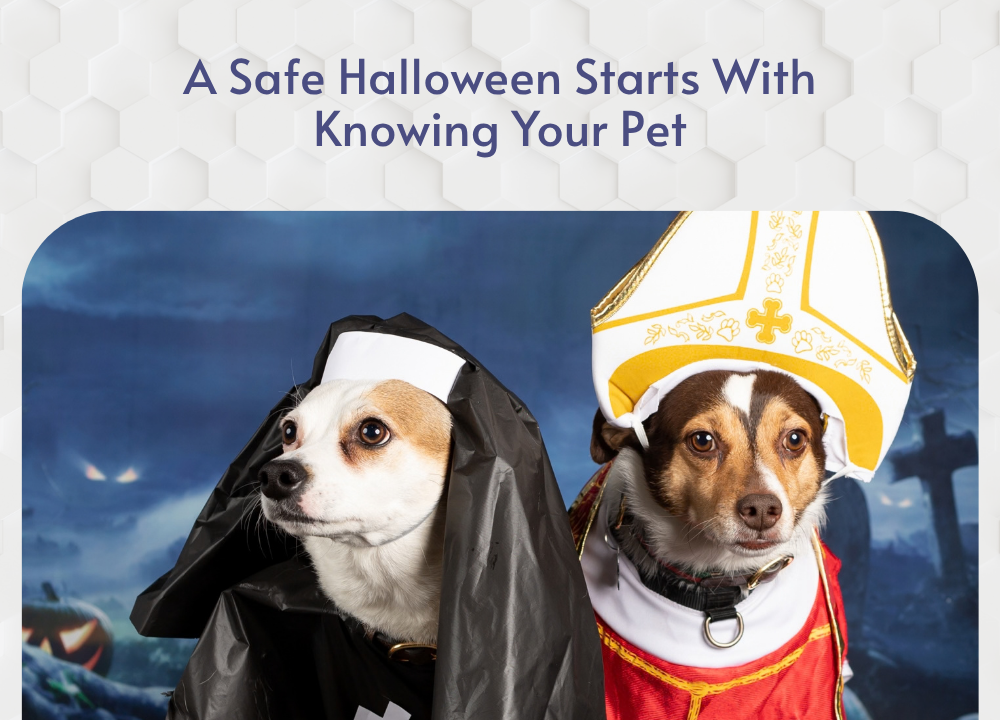
A Safe Halloween Starts With Knowing Your Pet
Every pet is different.
A confident dog may enjoy watching visitors from a safe distance while a nervous rescue dog may be happiest in a quiet room upstairs. Cats may prefer to disappear long before the first trick or treater arrives.
The best plan is the one built around your pet’s personality and your home.
As Edmonton real estate professionals and long-time supporters of local animal rescue, we believe a home should work for every member of the household, including the four-legged ones.
A few thoughtful changes before Halloween night can help make the evening safer, calmer and more comfortable for everyone.