Buying an Acreage in Alberta: What City Buyers Need to Know First
Buying an acreage in Alberta can feel exciting until questions about wells, septic systems, zoning, financing, road access and ongoing maintenance start piling up. The good news is that with the right preparation, rural ownership can be incredibly rewarding. Before you start touring properties, here is what city buyers should understand to make a confident, informed acreage purchase in Alberta.
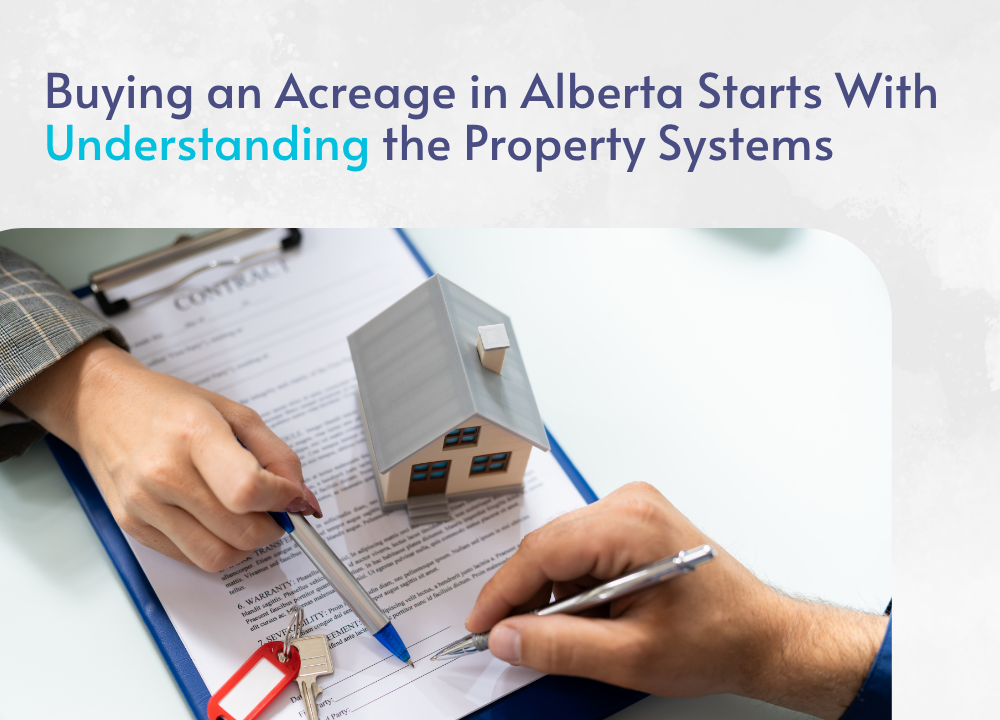
Buying an Acreage in Alberta Starts With Understanding the Property Systems
One of the biggest adjustments for city buyers is realizing that many rural properties operate differently from homes connected to municipal services.
In the city, you rarely think about where your water comes from or where wastewater goes. On an acreage, those systems can become an important part of both your inspection and your long-term ownership costs.
Water and septic systems
An acreage may use a drilled well, cistern or another private water source. Buyers should understand where the water comes from, how reliable the supply is and whether water quality testing should be completed before removing conditions.
If the property has a well, ask about its age, production history and available records. Water quantity matters just as much as water quality, particularly for larger households or properties with livestock.
Septic systems deserve the same attention. The type, age, location and maintenance history can all matter. Replacing a failed septic system can be a significant expense, so proper due diligence is worthwhile.
Heating can also look different outside the city. Acreages may use natural gas, propane, electricity or other systems. Understanding the home's utility setup and reviewing past operating costs can help you build a more realistic monthly budget.

Rural Financing Can Work Differently Than Buying in the City
Not every acreage fits neatly into a standard residential mortgage.
Lenders may consider the amount of land, condition of the home, number and type of outbuildings and whether portions of the property have agricultural or commercial use.
The property appraisal can also affect financing. A large shop, barn or extra land may be highly valuable to you while a lender may assign less value to those features when determining the mortgage amount.
This is why it helps to speak with a mortgage professional before beginning your acreage search rather than after finding the perfect property.
Ask whether your lender has any restrictions around:
Total acreage
Agricultural land
Outbuildings
Mixed property uses
Unfinished or unconventional structures
Knowing the financing parameters ahead of time can save you from falling in love with a property that does not fit your lending options.
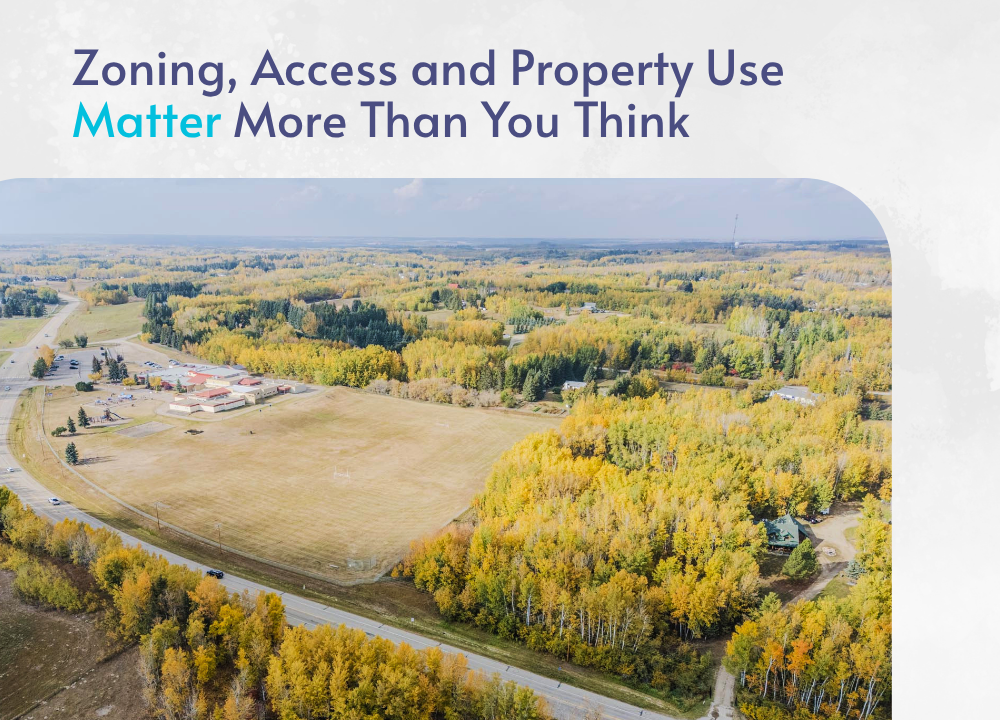
Zoning, Access and Property Use Matter More Than You Think
A beautiful property can quickly become the wrong purchase if you cannot use it the way you intended.
Before buying, confirm the property's zoning and permitted uses with the municipality. Rural land use rules can vary between counties and even nearby properties can have different zoning.
This becomes particularly important if you are considering:
Keeping horses or livestock
Operating a home based business
Building a shop or additional structure
Adding another dwelling
Subdividing land in the future
Do not assume that because a neighbouring acreage has a barn, business or additional dwelling that you will automatically be allowed to do the same.
Access should also be reviewed carefully. Some properties rely on private roads, shared driveways, easements or registered access agreements.
Your Realtor and lawyer can help identify items on title that could affect how the property is used and whether another party has rights over part of the land.

Acreage Living Comes With More Maintenance and More Freedom
For many buyers, the appeal of rural living is easy to understand. More privacy, more space, room for hobbies and fewer neighbours can completely change how home feels.
That freedom comes with additional responsibility.
Long driveways need snow removal. Larger yards require more equipment and time. Trees, drainage, fences, wells, septic systems and outbuildings all become part of the maintenance picture.
When buying an acreage in Alberta, think beyond what the property looks like on a summer afternoon.
Ask yourself how the property will function in January. Who will clear the driveway after a major snowfall? How much grass needs cutting? Is there equipment included or will you need to purchase your own?
There are also practical lifestyle considerations that city buyers may overlook.
Internet service, garbage collection, school transportation, road maintenance and emergency response times can vary considerably depending on the location.
None of these factors should discourage you from acreage living. They simply need to fit the lifestyle you actually want.

Know What You Are Buying Before You Fall in Love With the View
Acreages often require more due diligence than a typical city property because you are evaluating more than just the house.
Depending on the property, buyers may want to investigate:
Well production and water quality
Septic condition and maintenance
Property boundaries and surveys
Permits for additions and outbuildings
Zoning and permitted uses
Access agreements and easements
Heating systems and utility costs
Drainage and grading
Condition of shops, barns and other structures
A standard home inspection remains important but it may only be one part of the process.
Working with a Realtor who understands rural properties can help you identify the right questions before writing an offer and determine which inspections, documents or specialists may be appropriate for that particular acreage.
Acreage ownership can offer a lifestyle that is difficult to recreate in the city. The goal is not to make the buying process feel complicated. It is to make sure the space, freedom and privacy you are buying also make sense financially and practically for the years ahead.