Acreage Living: Weighing the Pros and Cons of Rural Life
Acreage living can offer privacy, space, and a quieter pace, but it also comes with responsibilities that are easy to underestimate. Understanding the Pros and cons of acreage living can help you decide whether rural life truly fits your lifestyle, budget, and long-term plans. Keep reading for the key factors to consider before confidently making your move to the country.

The Space and Privacy That Draw Buyers to Acreage Living
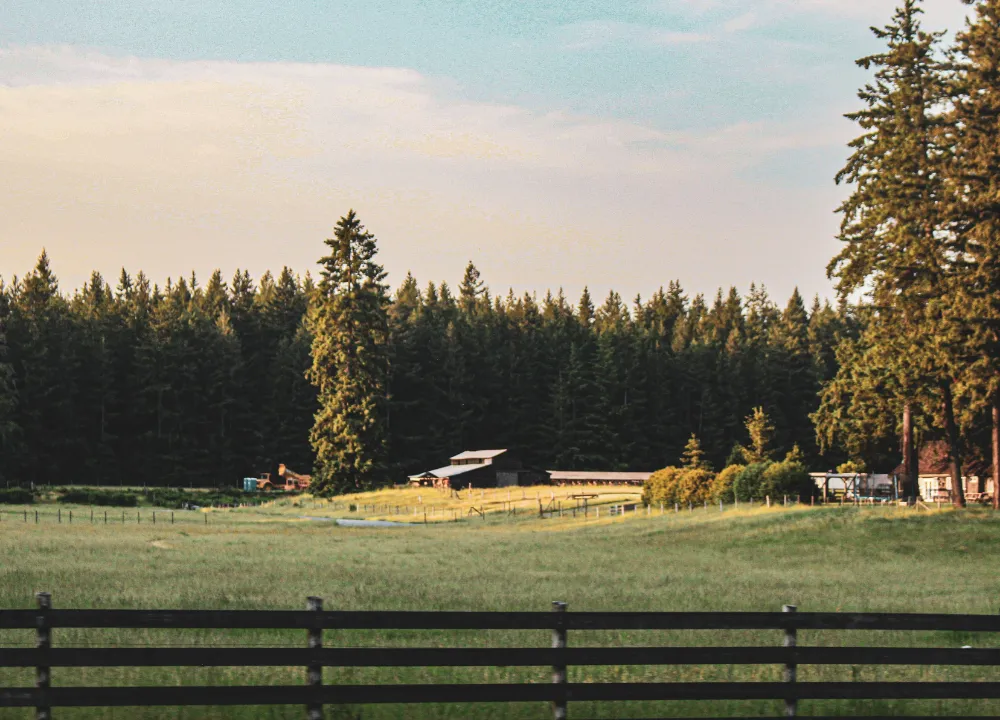
For many buyers, the appeal of an acreage is immediate. There is more room to breathe, fewer neighbours nearby, and greater flexibility in how you use your property.
That extra space can mean room for a workshop, recreational vehicles, pets, gardens, outdoor entertaining, or simply more privacy. For buyers looking to step away from the pace of city life, acreage living can offer a meaningful lifestyle change.
The key is making sure the property supports the life you imagine. A beautiful setting matters, but access, maintenance, utilities, and location will influence how enjoyable the property is over time.
Pros and cons of acreage living
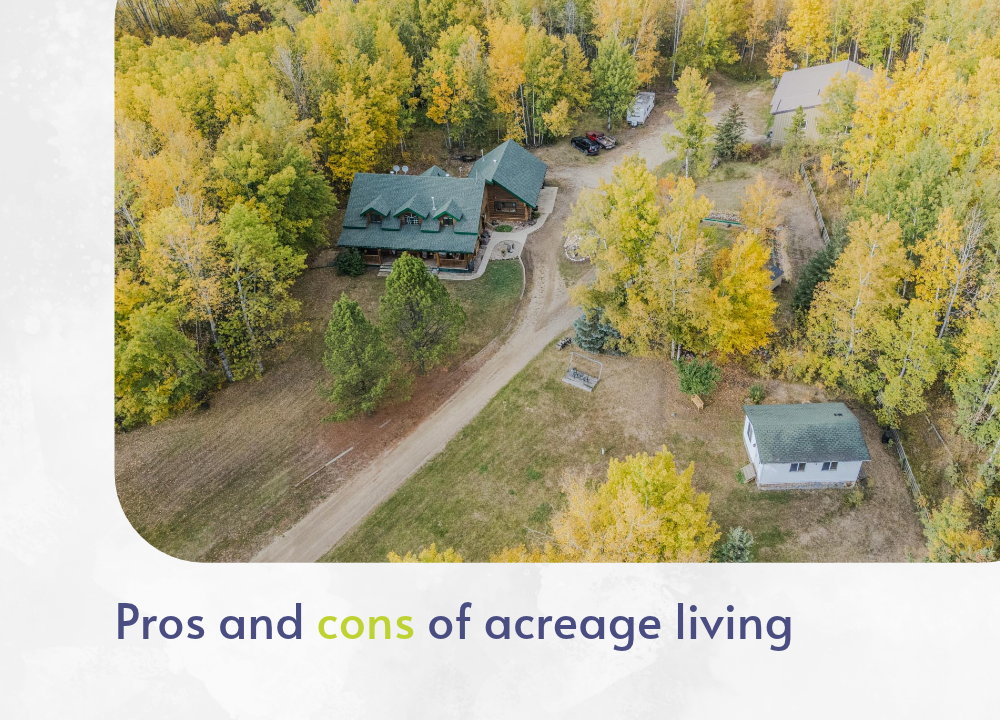
The benefits can be significant, but rural ownership usually requires more hands-on involvement than city living.
Potential advantages
More privacy and separation from neighbours
Larger lots and outdoor space
Greater flexibility for hobbies, storage, and pets
Quieter surroundings
More connection to nature
Potential challenges
More yard and property maintenance
Snow removal on longer driveways
Longer travel times
Responsibility for private utilities
Additional equipment and upkeep
Looking carefully at the Pros and cons of acreage living before buying can help you avoid falling in love with the idea of rural life without understanding the day-to-day reality.
Rural Utilities Can Change How You Own a Home
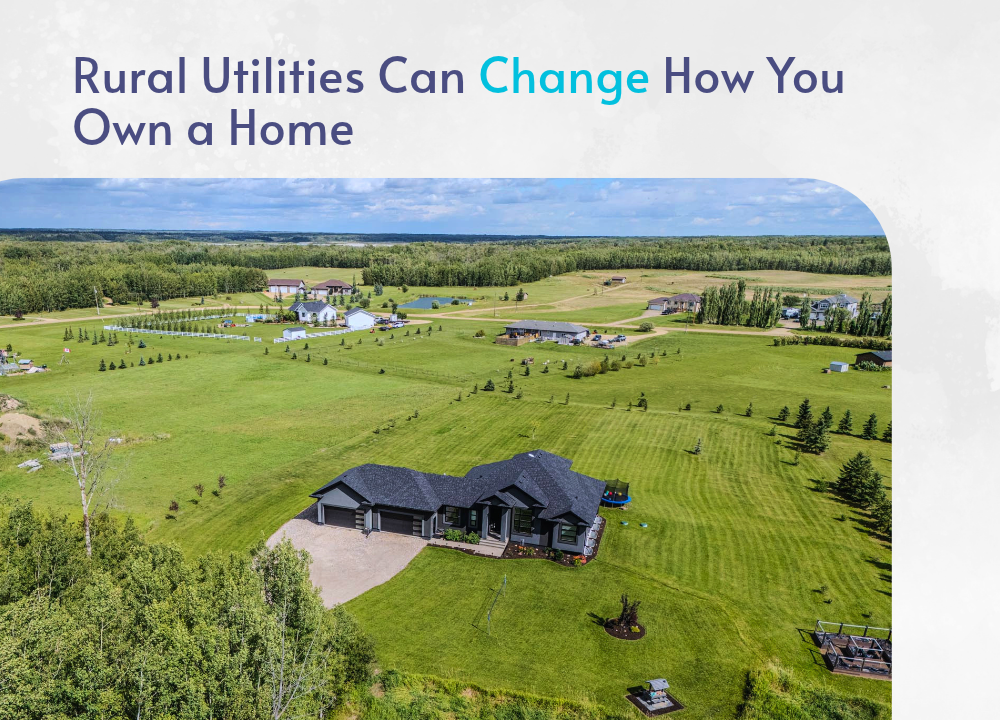
Many acreage properties rely on private systems instead of municipal services. Depending on the property, this may include a well, septic system, cistern, propane tank, or private waste system.
These systems are not necessarily a drawback, but buyers should understand their condition, maintenance history, and future costs.
Before purchasing, ask about:
Water source and quality
Septic type and age
Heating and fuel systems
Waste removal
Internet and cell service
Inspections and available maintenance records can provide valuable information before you commit.
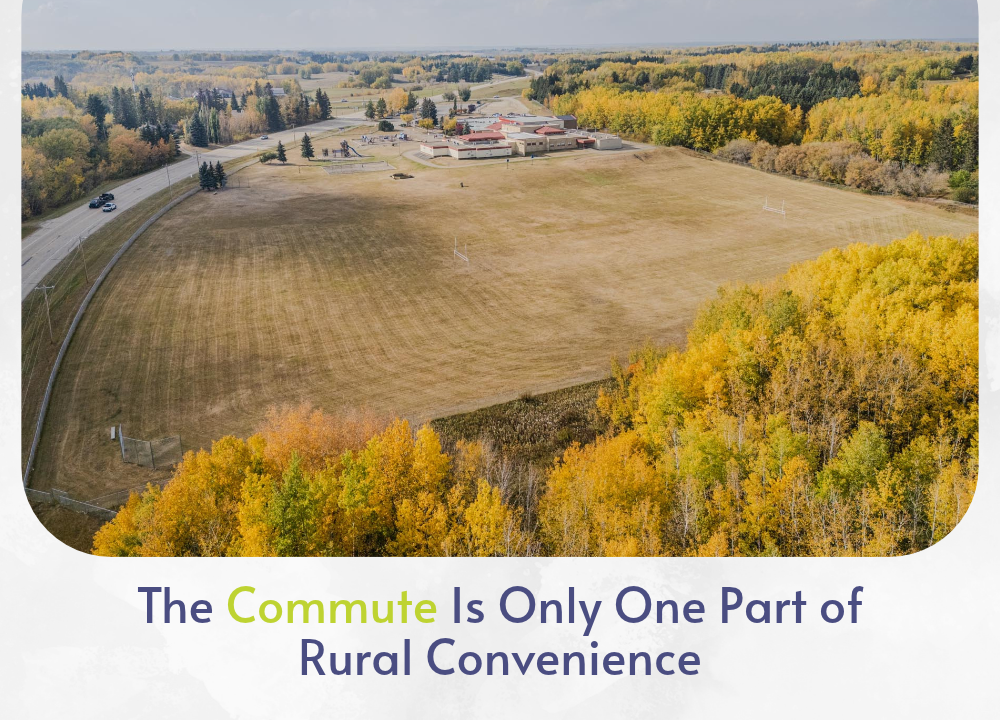
The Commute Is Only One Part of Rural Convenience
Acreage buyers often focus on the drive into Edmonton, but commuting is only one part of the equation.
Consider how far you will travel for groceries, schools, healthcare, recreation, and everyday errands. Winter conditions also matter, especially when rural roads or long driveways become part of your routine.
A smart approach is to drive the route at the times you would normally travel. What feels manageable once may feel very different five days a week.

Is Acreage Living Right for You?
The right acreage is not simply the one with the most land or the best view. It is the one that fits the way you actually want to live.
Think about how much maintenance you are comfortable managing, how often you need to be in the city, and which rural features matter most.
A knowledgeable real estate agent can also help you evaluate details that are easy to overlook, including utilities, access, property systems, location, and resale considerations.
The Dave Ozubko Real Estate Team helps buyers assess acreage properties around the Edmonton area with both lifestyle and long-term ownership in mind.
When the property, location, and responsibilities align with your priorities, acreage living can offer something difficult to replicate in the city: more space, more privacy, and greater freedom in how you use your home.